

As the body’s largest organ, your skin does far more than serve as a simple physical barrier against daily pollution, harsh weather, and external stress. At a microscopic level, the outermost layer of your skin known as the stratum corneum, houses a complex, thriving ecosystem of trillions of microscopic organisms. This community of beneficial bacteria, fungi, and microbes is collectively known as the skin microbiome.
To keep this living shield strong, your skin relies on an acidic surface environment, maintaining an optimal pH range between 4.5 and 5.5 (often called the acid mantle).
Think of your skin microbiome as a home garden:
Good bacteria are the flowers that keep the soil fertile and vibrant.
Bad bacteria are invasive weeds that cause inflammation, dryness, and premature aging.
Prebiotics act as the specialized fertilizer.
Rather than wiping out all microbes like harsh cleansers do, topically applied prebiotics selectively nourish your skin’s friendly bacteria. By providing the exact nutrients these beneficial microbes need to thrive, prebiotics help maintain your skin’s protective acid mantle, strengthen barrier function, and naturally crowd out harmful bacteria before they cause irritation or damage.

A balanced microbiome promotes a long & healthy life. It reduces chronic inflammation. It slows down the visible signs of aging. A healthy lifestyle must include caring for these microscopic skin residents. Knowing how to feed them is the key to lasting vitality & youthful skin.
Educational Purpose Only: Content published on Sazaaz.com is strictly for informational and educational purposes and does not constitute medical advice, diagnosis, or treatment. Skincare regimens and microflora reactions vary significantly by individual. Always consult a board-certified dermatologist, physician, or qualified healthcare professional before making changes to your health routine or introducing new topical treatments. Never disregard professional medical advice or delay seeking it because of something you have read on this website.
HEALTHY SKIN MICROBIOMES
A thriving skin microbiome relies on a balanced and diverse community of microorganisms. Much like a healthy ecosystem in nature, no single bacterial species should dominate your skin’s surface. When hundreds of beneficial microbial strains coexist, they keep the skin barrier calm, resilient, and naturally protected against environmental stressors like dry winter air, harsh soaps, or urban pollution.
This vital partnership begins at birth, as newborns are exposed to their mother’s microflora. During these early stages of life, these microscopic residents actively train the body’s developing immune system. By signaling immune cells to recognize helpful bacteria as peaceful neighbors, a process known as immune tolerance, the microbiome helps calm unnecessary inflammation while preparing your body to swiftly defend against harmful pathogens.
Benefits of healthy microbiome:
Protection from pathogens: Good bacteria fight off harmful microbes. They compete for space & food on the skin.
Acid mantle support: The skin has a slightly acidic surface. This is called the acid mantle. Good bacteria produce natural acids to keep the pH low. This acidic environment kills bad bacteria.
Immune regulation: The microbiome constantly talks to the immune system. It helps calm down redness & swelling.
Moisture retention: Good bacteria help the skin hold onto water. This keeps the skin hydrated.
The skin is not the same everywhere. Different parts of the body have different environments. The microbiome changes based on the local skin conditions.
| Skin Zone | Target Body Areas | Environmental Traits | Dominant Microbes |
|---|---|---|---|
|
Sebaceous (Oily Environment) |
Face (T-Zone), forehead, chest, upper back | High sebum (oil) production, high hair follicle density | Cutibacterium acnes, Malassezia species (yeast) |
|
Moist (Humid Environment) |
Underarms (axillae), groin, inner elbow, behind knees | High sweat gland density, warm (~95°F–98°F), high humidity | Staphylococcus species, Corynebacterium |
|
Dry (Exposed Environment) |
Forearms, hypothenar palms, outer legs, feet | Low sebum production, high air exposure, fluctuating humidity | High microbial diversity (Streptococcus, Micrococcus) |
Remember not all bacteria are equal; some are helpful partners while others are troublemakers.
Staphylococcus epidermidis: This is a highly beneficial bacterium. It lives peacefully on the skin. It produces special acids that lower the skin’s pH & keeps harmful bacteria away.
Cutibacterium acnes: This bacterium loves oil. In normal amounts, it helps the skin but in large amounts, it causes acne & pimples.
Staphylococcus aureus: This is a harmful bacterium. It causes infections. It worsens conditions like eczema & severe acne. Good bacteria actively fight against it.
KEEPING A HEALTHY SKIN MICROBIOME LEVEL
Taking care of your skin microflora requires an all-around daily effort, skincare products are only one piece of the puzzle. While high-quality topicals nourish the skin from the outside, your diet, sleep quality, stress levels, and environment play equally critical roles from the inside.
The main goal of a microbiome-friendly routine is to support your friendly bacteria so harmful microbes can’t take over. When this delicate ecosystem loses its natural balance, it causes a condition known as microbial dysbiosis.
When dysbiosis occurs, your skin’s natural moisture barrier becomes compromised. This breakdown makes the skin far more vulnerable to environmental damage, which can accelerate visible signs of aging, trigger stubborn acne flare-ups, and cause chronic dryness or irritation.
GUT-SKIN AXIS: BEAUTY FROM WITHIN
The skin and the digestive system are deeply connected. This connection is called the “gut-skin axis“. What happens in the gut directly affects the face, a healthy gut leads to glowing skin while an unhealthy gut results in breakouts and dullness. When the gut is healthy, it absorbs nutrients properly, it also keeps the inflammation lower. When the gut is unhealthy, it becomes leaky, harmful toxins escape the gut and enter the bloodstream. These toxins travel to the skin later causing redness, swelling, and early aging.
Nourishing your skin doesn’t just happen at the sink, it starts on your plate. Through a bi-directional communication channel known as the gut-skin axis, the health of your digestive tract directly influences your skin’s clarity, hydration, and inflammatory response. When you feed your gut microflora nutrient-dense whole foods, they produce beneficial compounds that calm systemic inflammation and reinforce your skin barrier from the inside out.
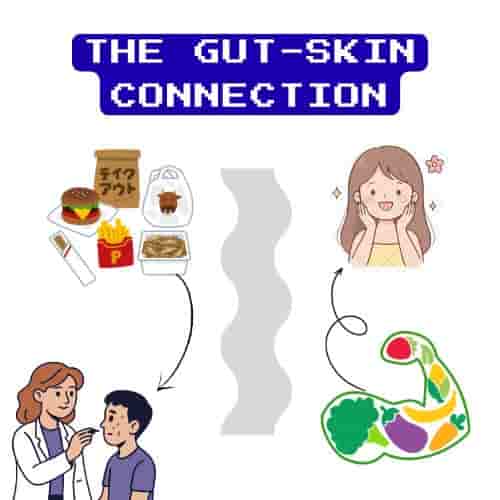
To optimize this internal pathway, consider incorporating these foundational dietary habits:
Incorporate Prebiotic-Rich Plant Foods: Prebiotics are non-digestible fibers that serve as primary fuel for beneficial gut microbes. Everyday kitchen staples like garlic, onions, raw asparagus, slightly green bananas, and whole oats supply the soluble fiber your gut needs to produce short-chain fatty acids (SCFAs) natural metabolic byproducts that lower body-wide inflammation and support skin hydration.
Add Fermented Probiotics: While prebiotics feed existing friendly bacteria, fermented foods introduce live, active cultures directly into your digestive tract. Enjoying plain Greek yogurt, unsweetened kefir, traditional sauerkraut, or kimchi helps maintain diverse gut microflora, which helps regulate your immune system and minimize inflammatory skin flare-ups.
Embrace Anti-Inflammatory Whole Foods: Adopting a Mediterranean-style eating pattern, rich in omega-3 healthy fats (such as wild-caught salmon and extra virgin olive oil), fresh vegetables, and whole grains helps neutralize oxidative stress and protects natural collagen structures against premature aging.
Explore Ingestible Skincare Wisely: Functional supplements, such as hydrolyzed collagen peptides paired with prebiotic fiber, have gained popularity across North America for supporting skin elasticity and digestive lining health. However, because individual dietary needs and sensitivities vary, always discuss new supplements with a registered dietitian or physician before adding them to your daily routine.
Daily Lifestyle Habits for a Thriving Skin Microbiome
Protecting your skin microflora isn't just about what you apply—it's equally about the daily habits you avoid. Everyday routines heavily influence whether beneficial microbes thrive or harmful bacteria take over. Building a calm, resilient skin barrier requires a balanced, protective approach to daily hygiene and lifestyle management.
1. Practice Gentle Cleansing & Preserve the Acid Mantle
Washing your face more than twice daily or using harsh, foaming soaps strips away essential natural oils and washes off friendly microflora. Traditional alkaline soaps disrupt your skin's natural pH level (which should stay between 4.5 and 5.5). Stick to gentle, pH-balanced cleansers and avoid harsh antibacterial soaps, which indiscriminately wipe out good bacteria and leave the skin barrier vulnerable to external pathogens.
2. Limit Exfoliation & Prioritize Daily Sun Protection
Over-scrubbing with aggressive face physical polishes or overusing strong chemical exfoliants (like high-percentage AHAs or BHAs) breaks down the physical protective layer of your skin (the stratum corneum). Cap exfoliation to 1–2 times per week max. Additionally, daily ultraviolet (UV) radiation damages microflora DNA and speeds up skin aging—making broad-spectrum SPF 30+ sunscreen an essential, non-negotiable step every single morning.
3. Manage Stress Levels & Maintain Internal Hydration
Chronic psychological stress triggers elevated stress hormones like cortisol and inflammatory signaling proteins (such as Interferon-gamma), which alter immune function and weaken the skin barrier. Pairing stress-reduction techniques—like adequate sleep and mindfulness—with proper daily water intake ensures your skin cells retain the hydration required to maintain a calm, balanced microbial ecosystem.
TOP PREBIOTIC INGREDIENTS FOR SKINCARE
The cosmetic industry is embracing microbiome science. When good bacteria consume prebiotics, they produce healthy byproducts, these byproducts are called postbiotics. Postbiotics include natural acids & peptides which calms the skin & fights wrinkles.
When shopping for skincare products, check the ingredient list & look for these powerful prebiotics:
| PREBIOTICS | BENEFITS |
|---|---|
| Inulin | This is a natural plant fiber, usually extracted from chicory root or sugarcane. It acts as a pure food source for beneficial bacteria, also helps reduce redness & irritation. |
| Xylitol | This ingredient does two jobs at once: it acts as a prebiotic to feed good bacteria & also acts as a humectant (acts like a magnet for water – pulls moisture into the skin). |
| Rhamnose | This is a special type of sugar molecule; it feeds the microbiome effectively, also provides strong anti-aging benefits. It helps stimulate the production of new collagen & elastin. |
| Glucomannan | It’s a water-soluble fiber that works exceptionally well alongside probiotic treatments. It is very useful for controlling acne breakouts. |
Alpha-glucan oligosaccharide | Acts as both a prebiotic & an antioxidant. It feeds the skin flora and also protects the skin from environmental damage. |
BIOLOGY OF SKIN AGING & LONGEVITY
Skin aging occurs through two distinct pathways: intrinsic aging, which is the unpreventable internal process dictated by genetics, natural hormonal shifts, and slowing cell turnover; and extrinsic aging, which is driven by external environmental stressors such as ultraviolet (UV) radiation, urban pollution, smoking, and poor nutrition.
Both internal and external factors directly impact the structural integrity of your skin and the delicate microbial ecosystem living on its surface.
Structural Skin Aging: Collagen, Elastin, and Natural Moisture Loss
Youthful skin owes its firmness, smooth texture, and resilience to a supportive internal framework powered by two primary proteins: collagen and elastin. Think of collagen as the sturdy scaffolding that gives your skin its strength and density, while elastin acts like a biological rubber band, allowing your skin to stretch and smoothly recovery its shape.
Starting in our early 20s, the body’s natural synthesis of collagen begins to decline by approximately 1% each year, while existing collagen fibers break down at a faster rate due to sun exposure and environmental stress. As this structural network thins, the skin gradually loses its natural cushion, leading to the formation of fine lines, wrinkles, and reduced firmness over time.
Simultaneously, aging causes your skin’s sebaceous (oil-producing) glands to shrink and produce fewer natural lipids. This drop in oil production weakens your skin’s protective moisture barrier, leaving mature skin feeling drier, rougher, and more sensitive to environmental changes if not properly nourished from the inside and outside.
How the Skin Microbiome Shifts Over Time
As lipid production drops, the skin microflora undergoes a predictable transformation. In youth, abundant sebum creates an ideal environment for beneficial, oil-loving microbes like Cutibacterium acnes and Lactobacillus species. However, as mature skin becomes drier, these youthful bacteria decline and are replaced by opportunistic species such as Corynebacterium kroppenstedtii.
Dermatological studies demonstrate that these microbial shifts occur so consistently across populations that scientists can now accurately estimate a person’s biological age simply by analyzing a swab of their skin microflora.
Prebiotics, “Inflammaging,” and Matrix Metalloproteinases (MMPs)
As beneficial microbes diminish, the skin loses its natural defense mechanism: the production of protective short-chain fatty acids (SCFAs) and organic acids. This loss can trigger a chronic, low-grade inflammatory state that longevity researchers refer to as inflammaging.
Chronic inflammaging increases oxidative stress and activates specialized destructive enzymes known as matrix metalloproteinases (MMPs). You can think of MMP enzymes like microscopic scissors—when overactivated by inflammation, they cut up and degrade healthy collagen and elastin fibers.
Incorporating targeted topical and dietary prebiotics helps counteract this cycle. By providing selective nutrients to your remaining friendly microflora, prebiotics help mitigate inflammaging, support the suppression of collagen-degrading MMP enzymes, and promote long-term cellular vitality.
The Inflammaging Cycle: How Microbes Protect Collagen
Everyone ages as it is a natural process, but skin aging happens due to a mix of intrinsic & extrinsic factors. Intrinsic factors are internal: they include genetics, natural hormone changes, & slowing down of cell renewal. Extrinsic factors are external: they include sun damage, pollution, smoking & poor diet.
Structural Skin Aging: Collagen, Elastin, and Natural Moisture Loss
Youthful skin owes its firmness, smooth texture, and resilience to a supportive internal framework powered by two primary proteins: collagen and elastin. Think of collagen as the sturdy scaffolding that gives your skin its strength and density, while elastin acts like a biological rubber band, allowing your skin to stretch and smoothly snap back into place.
Starting in our early 20s, the body’s natural synthesis of collagen begins to decline by approximately 1% each year, while existing collagen fibers break down at a faster rate due to sun exposure and environmental stress. As this structural network thins, the skin gradually loses its natural cushion, leading to the formation of fine lines, wrinkles, and reduced firmness over time.
Simultaneously, aging causes your skin’s sebaceous (oil-producing) glands to shrink and produce fewer natural lipids. This drop in oil production weakens your skin’s protective moisture barrier, leaving mature skin feeling drier, rougher, and more sensitive to environmental changes if not properly nourished from the inside and outside.
MICROBIOME CHANGES WITH AGING:
The skin microbiome does not stay the same throughout life. In youth, the skin produces plenty of oil. This creates a perfect home for bacteria like Cutibacterium acnes & Lactobacillus crispatus.
As oil production drops in older age, the environment changes. The youthful bacteria die off. They are replaced by different bacteria, such as Corynebacterium kroppenstedtii.
Scientific studies show that these microbiome shifts happen so predictably that a person’s age can be guessed just by swabbing their skin.
PREBIOTICS HELP REVERSE INFLAMMAGING:
As the youthful microbes disappear, the skin loses its natural protectors. The older microbiome produces fewer protective acids & fatty acids. This loss leads to a state of constant, low-level inflammation. Scientists call this inflammaging.
Inflammaging causes oxidative stress. It activates enzymes called matrix metalloproteinases (MMPs). These MMP enzymes act like microscopic scissors. They actively cut up & destroy healthy collagen & elastin.
Using prebiotics helps reverse this trend. Prebiotics feed the remaining youthful bacteria. They reduce inflammaging. They stop the MMP enzymes from destroying collagen. This promotes true cellular longevity & skin health.
PREBIOTICS TO REINFORCE THE SKIN'S BARRIER FUNCTION
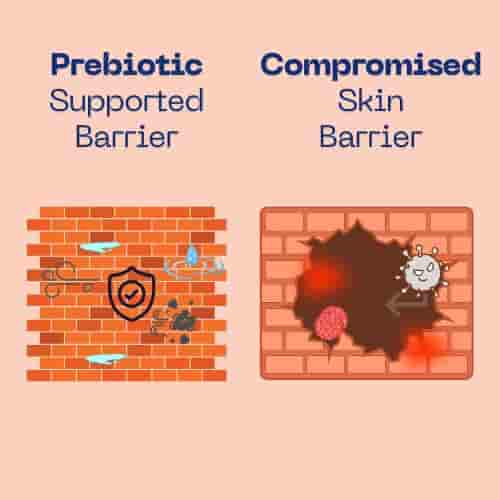
The skin barrier is the outermost layer of the skin. It is called the stratum corneum. Understanding the skin barrier is easy if one imagines a brick wall.
The skin cells are the bricks. The natural fats & oils between the cells are the mortar. These fats are called lipids. The most important lipids in the skin barrier are called ceramides.
When the brick wall is strong, moisture stays inside the body. Harmful things like pollution, allergens & bad bacteria stay outside. When the brick wall is broken, moisture escapes. The skin becomes dry, red & itchy. This is called a compromised barrier.
ROLE OF PREBIOTICS:
Prebiotics are essential for fixing a broken skin barrier. They work through a fascinating biological process.
First, the prebiotics feed the good bacteria on the skin surface. Once the good bacteria are strong, they produce special enzymes. One important enzyme is called sphingomyelinase.
This enzyme tells the skin cells to create more ceramides. Therefore, feeding the microbiome directly results in more mortar for the skin’s brick wall. This strengthens the barrier naturally from the outside in.
TRANSEPIDERMAL WATER LOSS (TEWL):
A strong barrier prevents a process called Transepidermal Water Loss (TEWL). TEWL occurs when water evaporates from the deep layers of the skin into the air. High TEWL leads to extreme dryness & premature wrinkling.
Using prebiotic ingredients like Galacto-oligosaccharides (GOS) significantly reduces TEWL. These ingredients help the skin hold onto its own moisture. This provides a plump, youthful & glowing appearance.
PANIC OF IMMUNE SYSTEM:
A broken barrier causes the immune system to panic. The body thinks it is under attack. It sends inflammatory signals to the skin. This causes redness & swelling.
Prebiotics help calm this panic. When good bacteria thrive, they release calming signals. They tell the immune system to relax. They lower the production of inflammatory chemicals. This soothing effect is vital for people with sensitive skin, eczema, or rosacea.
RESEARCH-BASED PROVEN PREBIOTICS SKINCARE ROUTINES
Building a simple prebiotic skincare routine is often better. Layering too many products can overwhelm the skin and disrupt the microbiome.
A healthy lifestyle approach means focusing on consistency. Regardless of age or gender, a basic prebiotic routine should follow these 4 steps:
Gentle cleansing: Use a mild, pH-balanced, non-foaming cleanser. Avoid hot water & use lukewarm water. Wash the face once in the morning & once at night.
Prebiotic treatment. Apply a serum or toner rich in prebiotic ingredients. Look for inulin, xylitol, or oligosaccharides on the label. Pat the product gently into the skin.
Barrier moisturizer. Lock in the prebiotic treatment with a good moisturizer. The moisturizer should contain ceramides, hyaluronic acid, or glycerin. This seals the brick & mortar barrier.
Sun protection (Morning only). The final step every morning must be sunscreen. Choose a broad-spectrum sunscreen with SPF 30 or higher. This protects the microbiome from harmful UV radiation.
SKINCARE ROUTINES AT DIFFERENT AGE GROUPS
Skin needs change dramatically throughout life. A teenager needs different care than a senior citizen. Skincare routines must adapt to these changing biological needs.
SKINCARE FOR TEENS:
The teenage years are dominated by hormone changes. Puberty causes oil glands to grow larger & produce excess sebum. This excess oil clogs pores. It fuels the rapid growth of acne-causing bacteria.
The goal for teens is to gently control oil, clear pores & stop breakouts without destroying the skin barrier.
Cleanse: Use a gentle cleanser containing Salicylic Acid. Salicylic acid cleans inside the pore without stripping the skin surface. Do not scrub aggressively.
Treat: Apply a lightweight prebiotic gel. Fructo-oligosaccharides (FOS) are excellent for teens. They feed good bacteria to naturally fight off the acne bacteria. Never pop or pick at pimples. This spreads bad bacteria & causes scars.
Hydrate: Teens with oily skin still need moisturizer. Skipping moisturizer causes the skin to produce even more oil. Use a light, oil-free (non-comedogenic) lotion.
Protect: Apply a daily SPF. Sunscreen prevents acne scars from turning into permanent dark spots.
SKINCARE FOR YOUTH:
In the 20s & 30s, the skin is generally strong & firm. However, collagen production begins to slowly decline. The first fine lines may appear around the eyes.
The goal during this stage is pure prevention & protection against early aging.
Cleanse: Wash morning & night with a gentle, hydrating cleanser.
Antioxidants: Apply a Vitamin C serum every morning. Vitamin C fights off environmental damage from pollution & the sun.
Prebiotic Hydration: Use a daily moisturizer containing Alpha-glucan oligosaccharide or Xylitol. This keeps the microbiome diverse & the barrier strong.
Early Intervention: Consider using mild exfoliants like lactic acid once a week. Some may begin light clinical treatments like microneedling to stimulate collagen early.
Protect: Daily broad-spectrum SPF 30+ is mandatory to prevent photoaging.

SKINCARE FOR MIDDLE AGE:
During the 40s & 50s, significant hormonal changes occur. Women often experience menopause. Estrogen levels drop sharply. This causes a rapid loss of collagen & moisture.
The skin becomes noticeably thinner, wrinkles deepen & age spots appear. The goal is to stimulate new collagen & deeply repair the barrier.
Gentle cleansing: Switch to a creamy, non-drying cleanser. Wash only once a day in the evening if the skin feels too dry.
Cellular renewal: Introduce a Retinoid (Vitamin A) treatment at night. Retinoids speed up cell turnover. They force the skin to produce new collagen.
Barrier support: Retinoids can be irritating. They must be paired with strong prebiotics & barrier-repairing ingredients. Use a thick moisturizer packed with ceramides & Inulin. This feeds the microbiome while the retinoid works.
Targeted care: Add a hydrating eye cream to address fine lines & under-eye bags.
Protect: Sunscreen remains critical to prevent further age spots & leathery skin.
SKINCARE FOR SENIORS:
Mature skin faces extreme dryness. The oil glands produce very little sebum. The skin barrier is fragile & easily damaged. The microbiome loses its youthful diversity. The goal for mature skin is ultimate comfort, deep hydration & gentle care.
Ultra gentle cleansing: Use a cleansing oil or a very mild milk cleanser. Avoid rubbing the skin with rough towels.
Deep moisture: Use extremely rich creams. Look for ingredients like hyaluronic acid, glycerin & shea butter.
Postbiotics & prebiotics: Mature skin benefits greatly from postbiotics. These are the actual beneficial acids that bacteria produce. Applying postbiotics alongside prebiotics gives the older microbiome the exact tools it needs to reduce inflammaging.
Protect: Continue daily sun protection. Wear wide-brimmed hats & sunglasses to protect delicate areas.
MEN VS. WOMEN: GENDER-SPECIFIC SKINCARE ADJUSTMENTS
Male& female skin are biologically different. These differences are driven mostly by hormones. Therefore, a one-size-fits-all approach does not work perfectly for everyone. Both genders need prebiotics, but the delivery methods must change.
BIOLOGICAL DIFFERENCES IN SKIN STRUCTURES:
Testosterone plays a major role in shaping male skin. Estrogen shapes female skin. These hormones create significant structural differences:
- Skin thickness:
Male skin: Up to 25% thicker & firmer structure.
Female skin: Thinner & more delicate.
- Collagen density:
Male skin: Higher natural collagen density. Wrinkles appear later but are deeper.
Female skin: Lower collagen density. Fine lines appear earlier. Rapid loss after menopause.
- Oil production:
Male skin: Highly active sebaceous glands. Constant high oil output. Larger pores.
Female skin: Less oil production. Prone to cyclical dryness & hormonal jawline acne.
- Microbiome diversity:
Male skin: Generally higher bacterial diversity. More Firmicutes.
Female skin: Dominated by Proteobacteria.

Optimizing Androgen-Dominant (Male) Cutaneous Health
Male cutaneous physiology is primarily shaped by circulating endogenous androgens, resulting in a stratum corneum that is approximately 20% thicker and exhibits higher follicular sebum production than female skin.
Sebum Regulation & Formulation Weight: Because elevated sebum levels increase susceptibility to follicular congestion, heavy lipid-rich occlusives often sit on the epidermal surface, exacerbating shine and comedogenesis. Lightweight, non-comedogenic gel formulations utilizing humectants (e.g., glycerin, hyaluronic acid) provide necessary hydration without compromising pore clearance.
Managing Mechanical Barrier Disruption: Shaving causes repeated micro-abrasions across the lower third of the face, stripping the lipid coat and disturbing local microbial balance. This disruption increases vulnerability to Staphylococcus aureus colonization, pseudofolliculitis barbae, and mechanical erythema.
Targeted Microbiome Recovery: Post-shave applications infused with prebiotic substrates (such as inulin or alpha-glucan oligosaccharides) support the rapid recolonization of commensal organisms like Staphylococcus epidermidis. Re-establishing microbial equilibrium helps suppress opportunistic pathogens and accelerate barrier recovery.
Hormonal Dynamics & Barrier Maintenance in Female Physiology
Female cutaneous physiology experiences continuous structural shifts driven by estrogen and progesterone fluctuations throughout the menstrual cycle and perimenopause.
Targeted Hydro-Lipid Layering: Lower baseline sebum production makes female skin more susceptible to transepidermal water loss (TEWL). A layered regimen—applying low-molecular-weight humectant serums beneath ceramide-dense emollient creams—reinforces the intercellular lipid matrix more effectively than single-phase moisturizers.
Perimenstrual Microbiome Shifts: Luteal phase progesterone surges increase sebum viscosity, often triggering mandibular acne. Utilizing targeted prebiotic and mild lipophilic acid formulations helps maintain follicular microbiome diversity without causing systemic epidermal desiccation.
Preserving Dermal Extracellular Matrix: Estrogen plays a vital role in stimulating Type I and Type III collagen synthesis. As estrogen levels decline with age, dermal structural density decreases rapidly. Early integration of signal peptides, retinoids, and broad-spectrum photoprotection helps mitigate enzymatic collagen degradation (matrix metalloproteinases).
Surfactant Cleansing for Occlusive Removal: Incomplete removal of cosmetic pigments and long-wear formulations leaves lipophilic residues that trap ambient particulate matter PM 2.5 . Double cleansing with a lipid-based cleanser followed by a gentle surfactant ensures complete pollutant removal without stripping essential lipids.
CONCLUSIONS
Modern dermatological science confirms that long-term cutaneous health relies on biological maintenance rather than topical suppression. Rather than stripping the skin with harsh exfoliants or masking structural changes, evidence-based skincare focuses on cultivating the skin microbiome—a complex microbial ecosystem essential for innate barrier function.
Topically applied prebiotics act as targeted substrates for commensal microflora (such as Staphylococcus epidermidis). Supporting these beneficial organisms reinforces the stratum corneum, helping to suppress opportunistic pathogens, mitigate transepidermal water loss (TEWL), and buffer against airborne oxidative stressors. Crucially, maintaining microbial diversity helps attenuate chronic, low-grade subclinical inflammation, a primary driver of accelerated skin aging, often termed “inflammaging.”
True cutaneous longevity extends beyond topical interventions. The gut-skin axis demonstrates how systemic nutrition directly impacts skin physiology. Consuming dietary prebiotic fiber, maintaining broad-spectrum photoprotection (SPF 30 or higher), optimizing hydration, and managing cortisol levels form the foundation of systemic skin resilience.
Aligning daily skincare routines with age- and sex-specific physiological needs provides a measurable, science-backed approach to aging gracefully. Nurturing the skin’s biological defenses is an investment in lifelong systemic health, demonstrating that physiological care, backed by clinical research, remains the most dependable path to sustained skin vitality.
References:
Scientific References & Primary Sources
-
Short-Chain Fatty Acids & Skin Aging:
Nambidi, S., et al. (2025). "A review of short-chain fatty acids in gut and skin: possible implications in skin aging." Journal of Functional Foods, Elsevier. ISSN: 1756-4646.
https://doi.org/10.1016/j.jff.2025.107010 (ScienceDirect)
- E. A. Grice et al., “Topographical and temporal diversity of the human skin microbiome,” Science, vol. 324, no. 5931, pp. 1190–1192, May 2009, doi: 10.1126/science.1171700.
- The Role of the Skin Microbiome in Health and Disease
Author: Mary Bates
https://www.embs.org/pulse/articles/the-role-of-the-skin-microbiome-in-health-and-disease/ F H Al-Ghazzewi, R F Tester, “Impact of prebiotics and probiotics on skin health,” Benef Microbes, vol. 5, no. 2, pp. 99-107, June 2014, doi: 10.3920/BM2013.0040
- Yanisa Ratanapokasatit et al., “How Microbiomes Affect Skin Aging: The Updated Evidence and Current Perspectives,” Life, vol. 12, no. 7, pp. 936, June 2022, doi: 10.3390/life12070936
- Elizabeth A Grice et al., “The skin microbiome,” Nat Rev Microbiol, vol. 9, no. 4, pp. 244-253, April 2011, doi: 10.1038/nrmicro2537
- Morgan M Brown et al., “Staphylococcus epidermidis-Skin friend or foe?,” PLoS Pathog, vol. 16, no. 11, pp. e1009026, November 2020, doi: 10.1371/journal.ppat.1009026
- Inge Kortekaas K. et al., “The influence of lifestyle and environmental factors on host resilience through a homeostatic skin microbiota: An EAACI Task Force Report,” Allergy, vol. 79, no. 12, pp. 3269-3284, November 2024, doi: 10.1111/all.16378
Yuantong Zhao et al., “The gut-skin axis: Emerging insights in understanding and treating skin diseases through gut microbiome modulation (Review),” Int J Mol Med., vol. 56, no. 6, pp. 210, September 2025, doi: 10.3892/ijmm.2025.5651
- Short-Chain Fatty Acids & Skin Aging:
Nambidi, S., et al. (2025). “A review of short-chain fatty acids in gut and skin: possible implications in skin aging.” Journal of Functional Foods, Elsevier. ISSN: 1756-4646.
https://doi.org/10.1016/j.jff.2025.107010 (ScienceDirect) - Szu-Yu Pu et al., “Effects of Oral Collagen for Skin Anti-Aging: A Systematic Review and Meta-Analysis,” Nutrients, vol. 15, no. 9, pp. 2080, April 2026, doi: 10.3390/nu15092080.
[…] Prebiotics: This is the food for the good bacteria. Prebiotics are non-digestible fibers and nutrients that feed the probiotics. Examples include oat extract, aloe vera, and inulin. (Read more about Prebiotics for skincare here) […]