
The human skin is the body’s largest organ. It is not just a protective shield. It is a living, breathing ecosystem. On a microscopic level, millions of organisms live and work together. These organisms include bacteria, fungi, and viruses. Together, they make up the skin microbiome.
Just like a real city, the skin microbiome needs absolute balance to thrive.
- Good citizens: These are the beneficial bacteria. They are also known as probiotics. They keep the peace. They fight off invaders. They keep the skin hydrated, calm, and glowing.
- Bad citizens: These are the harmful, pathogenic bacteria. When they take over, chaos happens. This leads to acne, redness, eczema, and rapid aging.
When the city is in perfect harmony, the skin looks flawless. When the city is polluted by a bad diet, high stress, or harsh chemicals, the skin suffers deeply. Probiotics are the ultimate peacekeepers. They restore balance to the skin’s city.
WHAT ARE PROBIOTICS
These are the live, active good bacteria. They protect the skin directly, reduce redness & also balance natural oil production. Topical and oral probiotics increase moisture retention, reduce wrinkle depth, and protect against UV-induced photoaging, acting as a crucial defense against age-related skin deterioration.
Probiotics also increases collagen production and enhance skin elasticity, which diminishes with age. Probiotics helps restore an acidic pH to the skin and reinforce its barrier function, preventing dryness and protecting against environmental stressors.
How Probiotics Transform Teenage Skin:
- They balance oil: Probiotics help regulate the skin’s natural oil production, reducing greasiness.
- They fight inflammation: They calm angry, red, and swollen breakouts fast.
- They protect the barrier: Harsh acne washes strip the skin. Probiotics repair this damage and lock in needed moisture.
- They crowd out the bad guys: Good bacteria simply take up space. This leaves no room for acne bacteria to grow and multiply.
How Probiotics Promote Longevity in Adult Skin:
- They boost deep hydration: Certain probiotics increase the production of ceramides. Ceramides are natural fats that trap water in the skin. This keeps the face looking plump and youthful.
- They fight free radicals: Probiotics act as strong antioxidants. They neutralize free radicals caused by UV rays and pollution. This prevents premature aging and sun damage.
- They protect collagen: Probiotics block special destructive enzymes called MMPs. MMPs destroy collagen fibers. By blocking them, probiotics keep the skin firm and elastic.
- They promote cellular cleanup: Probiotics encourage a process called “autophagy.” This is the skin’s natural recycling system. It clears out old, damaged cells. It makes room for fresh, healthy, glowing cells.
- They protect DNA: Groundbreaking research shows probiotics can prevent the shortening of telomeres. Telomeres are the protective caps on DNA. Keeping them long slows down the entire aging process.
Probiotic interventions include consuming fermented foods, taking oral supplements, and using topical creams containing bacterial extracts (e.g., Lactobacillus and Bifidobacterium).
THE BIOTICS FAMILY
To bio hack skin longevity, it is important to know the biotics family. They work together as a powerful team to promote a healthy lifestyle.
- Prebiotics: This is the food for the good bacteria. Prebiotics are non-digestible fibers and nutrients that feed the probiotics. Examples include oat extract, aloe vera, and inulin. (Read more about Prebiotics for skincare here)
- Probiotics: These are the live, active good bacteria. They protect the skin directly. They reduce redness. They balance natural oil production.
- Postbiotics: These are the beneficial leftovers. After probiotics do their job, they leave behind healthy byproducts. Postbiotics include lactic acid, peptides, and fatty acids. Postbiotics are highly stable and excellent for anti-aging routines.
EFFECTS OF PROBIOTICS ON SKIN MICROBIOME
The skin microbiome is a complex ecosystem of trillions of micro organisms: bacteria, fungi, viruses, and mites. Living on the skin’s surface and in its layers. It acts as a protective barrier, educating the immune system, maintaining skin health, and fighting off pathogens.
The microbiome is not a static entity; it is a highly dynamic ecosystem that evolves continuously throughout a person’s life span. It is significantly influenced by hormonal fluctuations, sebaceous gland activity, and the competence of the innate immune system.
Two forms of skin probiotics:
- Topical Probiotics (Creams, Serums & Cleansers):
- Applied directly to the face.
- Act as an immediate physical shield against daily pollution.
- Instantly calm surface redness and irritation.
- Best used for sensitive skin, localized acne spots, and quick barrier repair.
- Oral Probiotics (Supplements and Whole Foods):
- Swallowed daily.
- Fix the root cause of inflammation deep in the gut.
- Provide long-term, total-body anti-aging benefits.
- Best used for chronic conditions like severe eczema, deep wrinkles, and overall lifespan longevity.
THE SUPPORT OF GUT-SKIN AXIS
The gut-skin axis is a bidirectional communication system where a healthy gut microbiome reduces systemic inflammation and oxidative stress, directly promoting skin longevity, elasticity, and barrier function. A balanced gut, supported by probiotics and fiber, limits collagen-degrading enzymes and prevents premature skin aging.
Past research suggests that enhancing gut health is a potent, proactive approach to skin care, acting from within to maintain a youthful complexion.
- Reduced Inflammation: A balanced gut microbiome decreases the production of pro-inflammatory cytokines, reducing chronic inflammation that causes collagen breakdown.
- Reduced Oxidative Stress: Gut bacteria produce antioxidants and metabolites (e.g., short-chain fatty acids) that protect skin cells from environmental damage like UV radiation.
- Enhanced Barrier Function: Beneficial microbes strengthen the gut barrier, reducing the leakage of toxins into the bloodstream that leads to skin dryness, sensitivity, and accelerated aging.
- Collagen & Elasticity Support: Certain gut-produced compounds (e.g., GABA) promote collagen production and improve skin elasticity.
Common aging gut issues:
- Dysbiosis: An imbalance in gut bacteria, often caused by poor diet or stress, can lead to increased skin inflammation, acne, and accelerated aging.
- Gut Barrier Dysfunction: A leaky gut allows toxins to trigger immune responses that degrade skin proteins.
SKIN INFLAMMAGING
Skin inflammaging (inflammation+aging) is a term used to describe the chronic, low-grade inflammation that happens as we get older and causes the skin to age faster.
Unlike acute inflammation (body’s necessary, short-term reaction to a cut or sunburn) inflammaging is a slow-burning silent fire that never fully turns off.
This persistent, invisible inflammation breaks down the building blocks of the skin, leading to:
- Collagen & Elastin Breakdown: The proteins that keep skin firm and bouncy are degraded, leading to wrinkles, fine lines, and sagging.
- Skin Barrier Dysfunction: Moisture loss, leading to chronic dryness and dehydration.
- Sensitivity & Redness: Skin that is more prone to flushing, irritation, and conditions like rosacea.
- Uneven Skin Tone: Dark spots or age spots can appear more frequently.
While you cannot stop aging, you can reduce inflammaging through a holistic approach:
- Sun Protection: Daily SPF is the most important step to prevent UV-induced inflammation.
- Antioxidants: Using serums with Vitamin C, E, or green tea to neutralize free radicals.
- Gentle Care: Avoiding harsh scrubs or products that strip the skin barrier, such as strong acids or fragrances.
- Lifestyle: Eating an anti-inflammatory diet (rich in omega-3s and antioxidants), managing stress, and getting enough sleep.
HOLISTIC SKIN INTERACTOME
Skin longevity cannot be achieved through topical or supplemental interventions alone. The skin interactome: a conceptual integration of the genome, microbiome, and exposome dictates the overall trajectory of cutaneous aging.
Components of the Skin Interactome:
- Genome (Internal): Genetic makeup, age, gender, and ethnicity of a person that dictate how the skin acts and ages.
- Microbiome (External/Internal): The collection of bacteria, fungi, and viruses (e.g., C. acnes, S. epidermidis) living on the skin surface that maintain homeostasis and barrier function.
- Exposome (External): The totality of external exposures over a lifetime, including sun exposure (UV radiation), pollution, climate, diet, sleep, stress, and lifestyle habits like skincare routines and smoking.
Managing the exposome involves controlling lifestyle, nutritional, and environmental factors that directly impact microbial diversity and skin health.
Nutritional Interventions for Microbiome Health:
Dietary composition is the most profound external modulator of the gut microbiome. A longevity-focused diet must incorporate both prebiotic substrates and probiotic organisms to feed the gut-skin axis.
- Probiotic-rich foods: Natural sources of live bacteria include yogurt, kefir, fermented milk, kimchi, sauerkraut, miso, and tempeh. These foods introduce transient beneficial microbes that aid in digestion, detoxification, and SCFA production.
- Prebiotic fibers: Foods high in non-digestible fibers such as asparagus, artichokes, chicory, onion, garlic, lentils, and whole grains (brown rice, oats) provide the necessary fuel for endogenous gut flora to thrive.
- Antioxidants and Micronutrients: Systemic oxidative stress degrades the skin from within. High-nutrient foods such as dark chocolate (rich in polyphenols), tomatoes (rich in lycopene and beta carotene), sunflower seeds (high in Vitamin E), and berries combat systemic oxidative damage and prevent UV-induced wrinkles.
- Furthermore, zinc (found in pumpkin seeds and beef) and Omega-3 fatty acids (found in salmon and flaxseeds) are critical for reducing inflammation, accelerating wound healing, and supporting immune function.
Conversely, diets rich in refined sugars, high-glycemic carbs, and excessive non-fermented dairy (particularly skimmed milk) can precipitate hormonal spikes, exacerbate acne pathways and accelerate glycation a destructive process where sugar molecules bind to collagen, rendering it stiff, brittle, and prone to wrinkling.
PROBIOTIC FRIENDLY LIFESTYLE
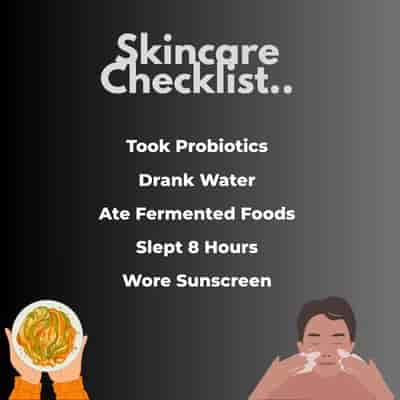
Supplements are fantastic, but getting probiotics from a daily diet is essential for a healthy lifestyle.
Certain nutrient-dense foods feed the skin from the inside out:
- Yogurt & kefir: Packed with live probiotics and vitamin B. They detox the skin and promote deep hydration.
- Kimchi & sauerkraut: Fermented vegetables loaded with good bacteria to lower gut inflammation.
- Dark chocolate: Satisfies the sweet tooth without causing breakouts. High in antioxidants to improve blood flow and hydration.
- Sunflower seeds: Packed with Vitamin E to decrease cell inflammation and prevent visible signs of aging.
- Tomatoes: Contain major carotenoids like lycopene. They protect the skin against UV damage and prevent wrinkles.
- Salmon & walnuts: Provide massive amounts of Omega-3 fatty acids. This reduces redness and plumps the skin.
To truly embrace a longevity lifestyle, great skincare must be paired with healthy daily habits.
The best creams in the world cannot outwork a highly stressful, sleep-deprived lifestyle.
- Manage daily stress: High stress increases the hormone cortisol. Cortisol triggers massive oil production and breaks down collagen fast. Practice deep breathing, yoga, or daily walks to keep the skin calm and clear.
- Prioritize deep sleep: The skin only repairs itself at night. Lack of sleep damages the skin barrier and causes massive water loss. Aim for 7-9 hours of quality sleep for true longevity and cellular repair.
- Be gentle with the face: Avoid harsh, scrubbing cleansers. Do not use heavily antibacterial soaps. These kill all the good bacteria. Choose mild, pH-balanced washes to keep the microscopic skin city thriving.
- Use mineral sunscreen: Chemical sunscreens can sometimes irritate the skin and disrupt the microbiome. Zinc oxide sunscreens protect against UV rays while remaining microbiome friendly.
The integration of probiotic science into anti-aging skincare represents a definitive paradigm shift from traditional, purely topical, reactive dermatology to a proactive, holistic, and microbiome centric approach.
Remember skin aging is not merely a localized phenomenon of structural degradation, but a highly complex, systemic process deeply intertwined with gut health, immunological competence, and cellular senescence.